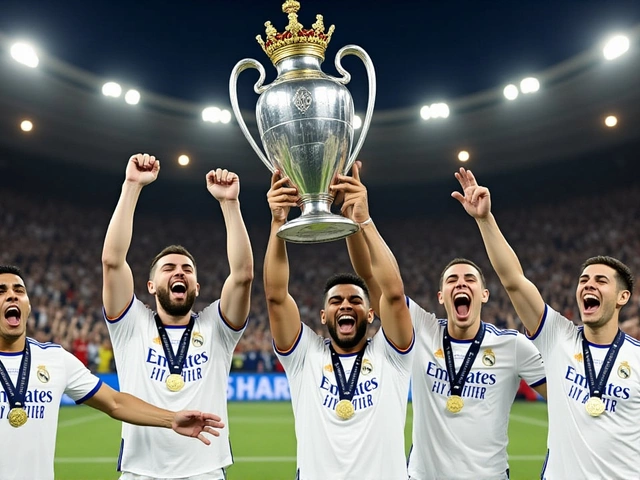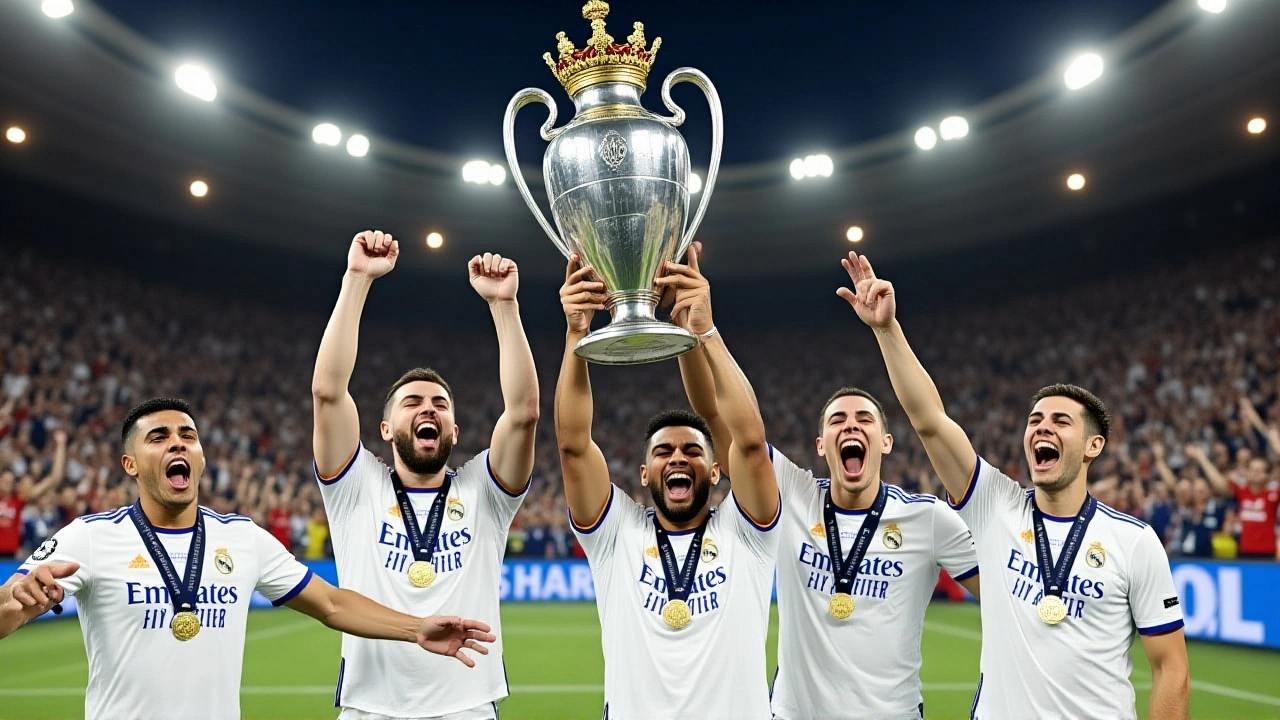
When the final whistle blew at the Stade de France on May 28, 2022, Real Madrid Club de Fútbol had done the unthinkable again — won the UEFA Champions League when it mattered most. A 1-0 victory over Liverpool Football Club, sealed by Vinícius Júnior’s 59th-minute strike, gave them their 14th European crown, extending a record no other club has come close to matching. But the night wasn’t just about football. It was about chaos. About resilience. About a goalkeeper who turned back everything Mohamed Salah threw at him — six times in the first half alone. And it was about a stadium that failed its fans before the first kick.
The Match That Defied Logic
The game itself was a masterclass in efficiency. Real Madrid didn’t dominate possession — they didn’t need to. They waited. They absorbed. And then, when the moment came, they struck. Federico Valverde’s diagonal pass found Vinícius Júnior cutting inside from the left, and with a single touch, he beat Alisson Becker. No celebration. No theatrics. Just cold, calculated execution. That goal, the only one of the match, was the difference between glory and heartbreak.
Meanwhile, Thibaut Courtois was playing like a man possessed. Nine saves. Six of them against Salah. One in the 9th minute, when the Egyptian striker fired from close range. Another in the 14th, denying a curling effort that looked destined for the top corner. By the 51st minute, he’d already turned away three more attempts from Liverpool’s most dangerous weapon. ESPN’s post-match analysis called it “the greatest individual performance in Champions League final history.” Even Liverpool’s manager, Jürgen Klopp, admitted afterward: “He was on another level.”
The Chaos Before Kickoff
But the real story began hours before the ball was kicked. The final was scheduled for 9:00 pm CET. It didn’t start until 9:37 pm. Why? Because French police, overwhelmed by ticketed Liverpool supporters trying to enter the stadium, responded with pepper spray — indiscriminately. Fans described scenes of panic: children crying, people collapsing, stewards unable to move. The chaos wasn’t caused by hooligans. It was caused by poor planning. UEFA later confirmed that over 1,500 ticketed fans were denied entry or forced to wait in dangerous conditions. The Stade de France, which had hosted the 2000 and 2006 finals, became a symbol of institutional failure.
It wasn’t just the fans. The match officials — led by French referee Clément Turpin — had to delay kickoff not because of weather, not because of injury, but because of human error. The incident drew comparisons to the 2020 Champions League final in Lisbon, where strict bio-bubbles ensured order. Here, in a city that prides itself on hosting global events, the system collapsed.
Ancelotti’s Legacy, Klopp’s Heartbreak
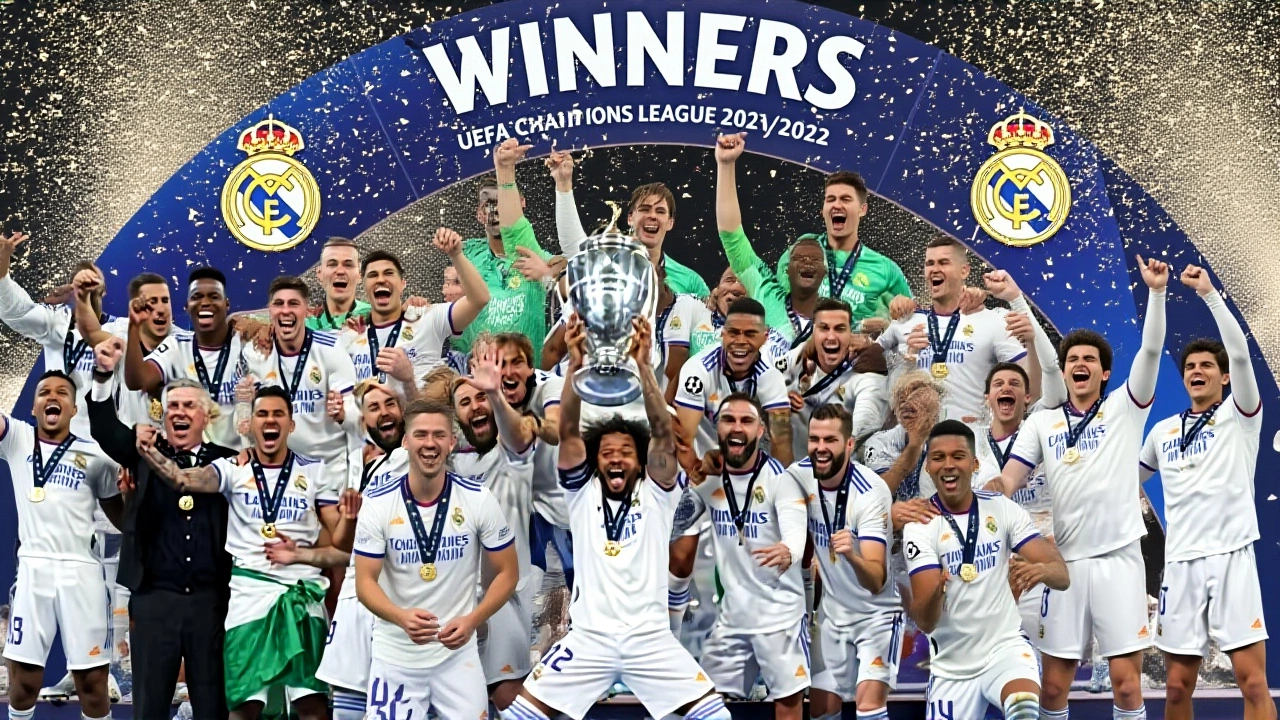
Carlo Ancelotti didn’t just win a trophy. He made history. With this victory, he became the first manager ever to lift the Champions League four times — two with AC Milan (2003, 2007) and now two with Real Madrid (2014, 2022). No one else has even reached three. His calm demeanor on the sideline, the way he rotated his midfield, the patience with which he let his team ride out Liverpool’s early pressure — it all added up to a coaching masterpiece.
For Klopp, it was another near-miss. Liverpool had won the trophy in 2019, and many believed 2022 was their year again. They dominated the stats: 62% possession, 21 shots to Real Madrid’s 8. But football isn’t about numbers. It’s about moments. And Courtois turned every moment into a wall. Klopp’s post-match interview was quiet, dignified. “We gave everything,” he said. “Sometimes, the best team doesn’t win. But tonight, the goalkeeper did.”
A Rivalry Rekindled — And Reversed
This was the third time these clubs met in a European final. The first, in 1981, ended in a 1-0 Liverpool win at the Parc des Princes. The second, in 2018, was a 3-1 Real Madrid triumph in Kyiv. But the story didn’t end in 2022. In the 2023-24 Champions League round of 16, Liverpool turned the tide. They won both legs 2-0 — first at Anfield with goals from Darwin Núñez and Salah, then at the Santiago Bernabéu with strikes from Alexis Mac Allister and Cody Gakpo. For the first time since 2009, Liverpool had beaten Real Madrid in a competitive fixture. It was poetic. It was overdue.
The head-to-head record in European competition now stands at 7 wins for Real Madrid, 5 for Liverpool, and 1 draw — with 17 goals to 13. But the psychological shift? That’s harder to quantify. After years of being haunted by Madrid’s aura, Liverpool finally stood tall on their turf.
What’s Next?
Real Madrid will keep chasing history. They’re the only club to have won the Champions League in three different decades. With young talents like Vinícius Júnior and Jude Bellingham emerging, they’re not done yet. For Liverpool, the focus shifts to rebuilding. Salah, now 32, still has fire — but the window is closing. Can they bridge the gap between elite performance and final-day execution? The 2024 results suggest they can. But the 2022 final reminds us: greatness isn’t always about control. Sometimes, it’s about who holds their nerve when everything falls apart.
Frequently Asked Questions
How did Thibaut Courtois’ performance compare to other Champions League final goalkeepers?
Courtois’ nine saves in the 2022 final were the most by any goalkeeper in a Champions League final since statistics were officially tracked in 2003. His six stops against Mohamed Salah alone surpassed even the legendary Iker Casillas’ 2014 final performance against Atlético Madrid. ESPN ranked it the greatest individual display in a final since Oliver Kahn’s 2001 heroics for Bayern Munich.
Why was the 2022 final held at the Stade de France instead of Istanbul?
The final was originally scheduled for Istanbul’s Atatürk Olympic Stadium, but UEFA moved it to the Stade de France in 2021 due to lingering COVID-19 travel restrictions affecting Turkish fans’ ability to attend. France, with its well-established infrastructure and experience hosting major finals, was chosen as a reliable alternative.
What impact did the crowd chaos have on UEFA’s future final venue selections?
UEFA launched an internal review after the 2022 final and tightened security protocols for future finals. While no venue was formally blacklisted, the organization now prioritizes host cities with proven crowd management systems and closer coordination with local law enforcement. The 2023 final in Istanbul and 2024 final in London were both praised for their smooth operations.
How many times have Real Madrid and Liverpool faced each other in European finals?
They’ve met in three European Cup/Champions League finals: 1981 (Liverpool won 1-0), 2018 (Real Madrid won 3-1), and 2022 (Real Madrid won 1-0). No other two clubs have met three times in the final. This makes their rivalry unique in European football history — a clash of two of the competition’s most decorated teams.
Did Liverpool’s 2024 wins over Real Madrid change the perception of their rivalry?
Absolutely. Before 2024, Liverpool had lost eight straight competitive matches against Real Madrid since 2009. Their back-to-back 2-0 wins in the round of 16 proved they could not only compete but dominate on Madrid’s home turf. It shifted the narrative from “Liverpool always lose to Madrid” to “Liverpool can beat anyone — even the kings of Europe.”
What does Carlo Ancelotti’s four Champions League titles mean for his legacy?
Ancelotti is now the only manager to win the Champions League with two different clubs, and the only one to win it four times. He’s surpassed Bob Paisley (3) and Zinedine Zidane (3). His ability to adapt tactics across decades — from Milan’s 4-4-2 to Madrid’s fluid 4-3-3 — shows unparalleled football intelligence. Many now consider him the greatest coach in the history of the competition.